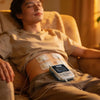
How EMS Massage Works for Athletic Recovery

How EMS Massage Works for Athletic Recovery
Electrical muscle stimulation (EMS) massage accelerates athlete recovery by activating deeper muscle fibers and flushing metabolic waste. Professional athletes use EMS to reduce downtime and muscle soreness after intense training. This drug-free protocol targets specific muscle groups, promoting blood flow and speeding tissue repair without adding joint stress.
Key Takeaways
- EMS massage activates deeper muscle fibers that conventional exercise misses, accelerating metabolic waste removal.
- Electrical impulses trigger involuntary muscle contractions that reach tissue layers hands and foam rollers cannot access.
- Athletes using EMS returned to baseline performance sooner than those relying on passive rest alone.
- The FDA recognizes EMS devices as effective tools for stimulating muscles, improving strength, and enhancing recovery.
What Is EMS Massage and How Does It Work?
EMS massage uses low-frequency electrical impulses to stimulate muscles, causing them to contract. The process mimics the body's natural nerve signals but reaches deeper tissue layers that conventional exercise often misses. Athletes who skip this recovery tool lose hours of reduced soreness and faster muscle repair between training sessions.
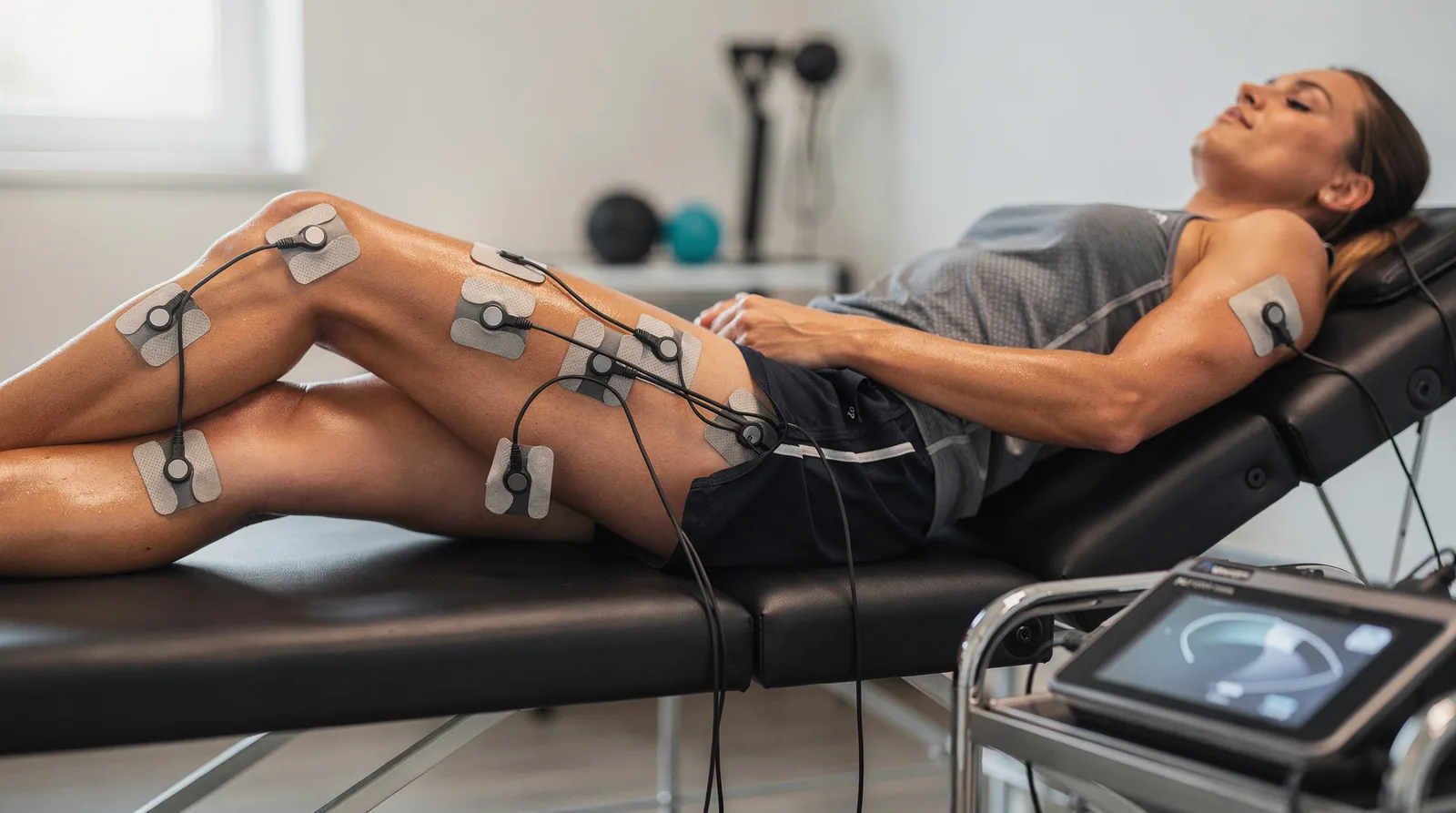
The mechanism behind how EMS massage works for recovery centers on forced muscle activation. Electrical impulses travel through electrodes placed on the skin, triggering contractions in targeted muscle groups. Unlike voluntary movement, EMS activates deeper muscle fibers that are difficult to engage with standard exercises. This deeper recruitment flushes metabolic waste from fatigued tissue while delivering oxygen-rich blood to damaged cells.
How does EMS differ from traditional massage?
Traditional massage applies external pressure to manipulate soft tissue. EMS generates internal contractions through electrical stimulation. The electrical approach reaches muscle layers that hands or foam rollers cannot access, making it a complementary tool rather than a replacement for manual therapy.
Can EMS massage speed up post-workout recovery?
Yes. The rhythmic contractions act as a pump, moving blood through congested muscle tissue. This circulation boost clears lactate and reduces the swelling that prolongs soreness. For marathon runners and gym-goers managing tight training schedules, faster recovery means fewer missed sessions and more consistent performance gains.
Tens Products supplies muscle stimulators designed for home use, supporting drug-free recovery protocols. These devices deliver the same electrical stimulation principles used in clinical settings, packaged for convenient self-application after workouts or competitions. The company's focus on reliable, easy-to-use electrotherapy equipment gives athletes a practical option for managing muscle fatigue without pharmaceuticals.
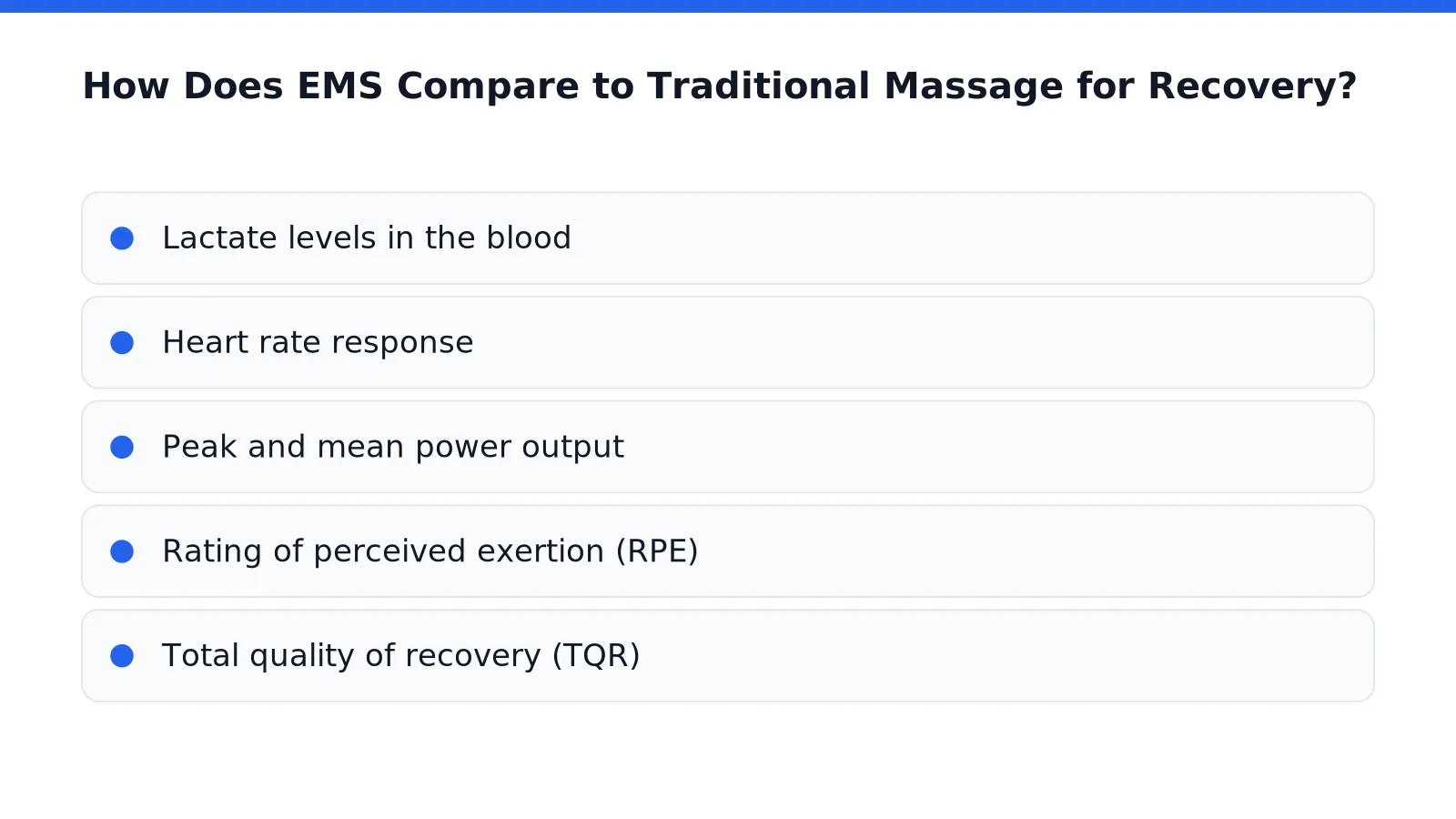
How Does EMS Compare to Traditional Massage for Recovery?
Electrical muscle stimulation and traditional massage both target post-exercise recovery, but they operate through different mechanisms. A direct comparison study assessed massage, EMS, and passive rest after exhausting exercise bouts. The research measured lactate disappearance and muscle recovery across all three interventions.
How EMS massage works for recovery centers on electrical impulses that trigger muscle contractions. These contractions help clear metabolic waste without requiring additional physical effort. Massage relies on mechanical pressure to manipulate soft tissue and promote blood flow.
What Did the Study Measure?
The study tracked several recovery markers after each intervention:
- Lactate levels in the blood
- Heart rate response
- Peak and mean power output
- Rating of perceived exertion (RPE)
- Total quality of recovery (TQR)
Twelve healthy male sport students participated across five test days. Each recovery method was tested in random counterbalanced order following high-intensity exercise.
Which Method Clears Lactate Faster?
The comparison examined lactate disappearance rates between EMS, massage, and passive rest. Electrical stimulation activates muscle pumping action that accelerates metabolic byproduct removal. Massage achieves similar clearance through external compression and circulatory stimulation.
Athletes who skip structured recovery lose training quality in subsequent sessions. Tens Products supplies reliable, safe, and easy-to-use devices that support consistent recovery protocols. The company's focus on pain-free living aligns with the needs of runners and gym-goers managing recurring soreness.
Can EMS Help Reduce Delayed Onset Muscle Soreness (DOMS)?
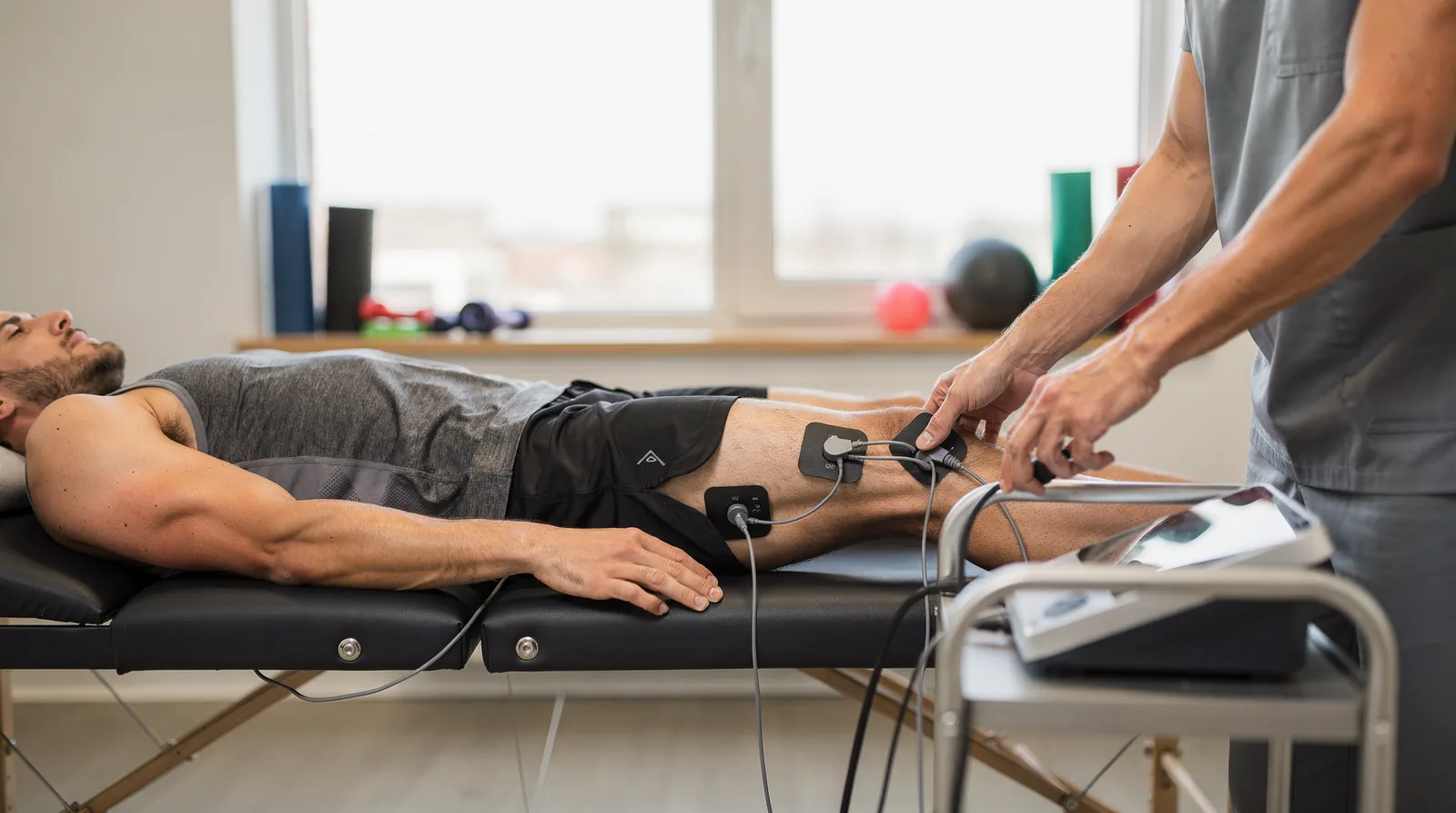
Electrical muscle stimulation directly targets the physiological aftermath of intense training. EMS massage accelerates recovery by flushing metabolic waste and reactivating fatigued muscle fibers. Athletes who skip this step lose training days to stiffness that active recovery alone cannot resolve.
The U.S. Food and Drug Administration recognizes EMS devices as effective tools in physical therapy. These devices stimulate muscles, improve strength, and enhance recovery. That mechanism matters for DOMS. After a grueling run or heavy leg session, microscopic muscle damage triggers inflammation and fluid retention. EMS contractions increase local blood flow without loading already sore joints. The rhythmic stimulation pushes lactate and metabolic byproducts out of the tissue. Faster clearance means less next-day stiffness.
How Does EMS Compare to Passive Rest for Muscle Soreness?
Passive rest leaves metabolic waste sitting in muscle tissue. EMS actively pumps it out. A study published in Europe PMC compared electrical muscle stimulation, massage, and passive rest after exhausting exercise. The EMS group showed faster lactate disappearance than the passive rest group. Athletes using EMS returned to baseline performance sooner. Lying on the couch does not create that circulatory response.
What Makes EMS Different from Standard Massage for Recovery?
Manual massage works surface tissue. EMS reaches deeper motor units that hands cannot access. The electrical impulse triggers involuntary contractions in muscles that remain tight even after foam rolling. This deeper recruitment restores range of motion faster. Muscle stimulators from Tens Products deliver this targeted activation at home. The company supplies clinically approved devices designed for reliable, drug-free recovery. Consistent use helps athletes return to training in peak condition without the downtime that derails progress.
What Does the Research Say About EMS for Athletic Performance?
Research confirms electrical muscle stimulation delivers measurable benefits for athletes. A systematic review published in 2025 examined how EMS massage works for recovery and performance enhancement specifically in soccer players. Soccer places significant physical demands on athletes and carries a high risk of injury. The review, conducted under PRISMA guidelines, analyzed electrical muscle stimulation as both a training and rehabilitation technology that has gained substantial attention in sports settings.
Can EMS improve strength in competitive athletes?
The systematic review identified strength gains as a primary outcome of EMS application. Soccer athletes using electrical muscle stimulation experienced improvements in muscle activation patterns that translated to functional performance. These findings matter because lost training days compound quickly during a competitive season. Athletes who cannot maintain strength between matches face performance declines that accumulate week after week.
Does EMS accelerate post-exercise recovery?
Recovery speed represents another key finding from the research. The review documented EMS benefits for post-exercise recovery in soccer athletes, who routinely face congested match schedules with minimal turnaround time. Faster recovery means less residual fatigue carrying into the next training session. For marathon runners and gym-goers following high-volume programs, this recovery acceleration helps maintain training consistency without forced downtime.
Tens Products draws on over 20 years of experience sourcing electrotherapy solutions that align with these evidence-based applications. The company supplies devices designed for reliable, drug-free pain management at home. Athletes seeking to integrate EMS into recovery protocols benefit from clinically approved equipment built for consistent, safe use across training cycles.
How Can Athletes Use EMS Safely at Home?
Athletes use EMS massage for recovery at home by following device instructions and starting with low intensity settings. Tens Products supplies muscle stimulators and accessories designed for consistent performance and convenience. Skipping proper setup risks ineffective sessions and wasted recovery time.
The company serves consumers seeking practical, non-pharmacological pain relief solutions and home electrotherapy equipment. Athletes benefit from a straightforward approach: read the manual, place electrodes correctly, and increase intensity gradually.
What Should Athletes Check Before Starting an EMS Session?
A quick pre-session checklist prevents most problems. Electrode placement matters more than intensity. Clean, dry skin improves contact and comfort.
- Verify electrode pads are intact and sticky
- Start at the lowest intensity setting
- Limit initial sessions to 15 to 20 minutes
- Keep the device away from water
How Does Tens Products Support Home EMS Use?
Tens Products emphasizes fast dispatch and transparent delivery information. Athletes receive clear guidance on shipping timelines before ordering. The company also provides free delivery on orders above £20 and simple returns. Secure payments complete a purchasing experience built around dependable outcomes.
Standard and wireless electrodes remain available alongside essential accessories. Replacing worn pads maintains consistent performance across training cycles. Athletes who track recovery sessions gain more from each device.
FAQ
How does EMS massage speed up post-workout recovery?
EMS massage activates deeper muscle fibers and flushes metabolic waste. Rhythmic contractions pump blood through congested tissue, clearing lactate and reducing swelling, which shortens soreness and speeds tissue repair without joint stress.
How does EMS massage differ from traditional massage?
Traditional massage applies external pressure to soft tissue, while EMS generates internal contractions through electrical impulses. EMS reaches deeper muscle layers that hands or foam rollers cannot access, making it a complementary tool rather than a replacement.
What makes EMS massage effective for athletes?
EMS activates deeper muscle fibers that conventional exercise misses, promoting blood flow and speeding tissue repair. The FDA recognizes EMS devices as effective for stimulating muscles, improving strength, and enhancing recovery, helping athletes return to baseline performance sooner than passive rest.
Conclusion
EMS massage delivers measurable recovery benefits that passive rest cannot match, faster lactate clearance, reduced soreness, and quicker return to baseline performance. Athletes integrating electrical muscle stimulation into home recovery protocols gain a practical, drug-free tool that reaches deeper muscle layers and accelerates tissue repair. Starting with proper electrode placement, low intensity settings, and consistent use transforms recovery timelines and maintains training consistency across competitive seasons.